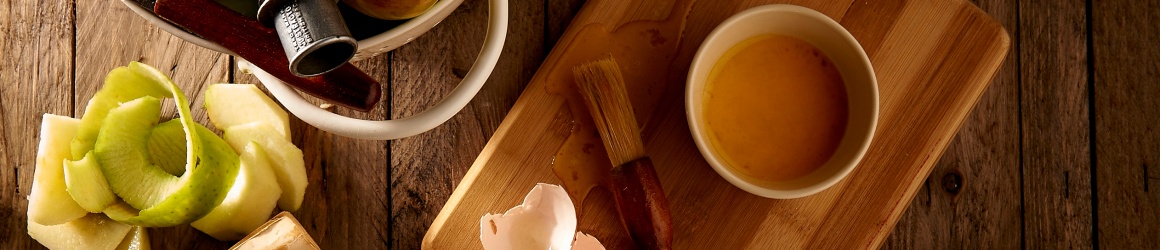
Autumn Orchard Crumble

Apples and pears are the quintessential fruits of autumn. They mingle beautifully in this Autumn Orchard Crumble. Warming spices such as cinnamon and ginger reflect the fire-colored leaves of autumn and counteracts its cold wewather.

Prep Time:  45 minutes
Cooking time:  40-50 minutes
Serves:  8
  • Butter
  • Flour
  • 2 firm cooking apples (like Granny Smith or Fuji)
  • 1 soft cooking apple (like Jonathan or McIntosh)
  • 2 tsp lemon juice
  • 2 firm cooking pears (like Bosc or Anjou)
  • 1 soft cooking pear (like Bartlett)
  • 2 Tbsp ginger chips or minced candied ginger
  • 1stp ground ginger
  • 2 Tbsp white sugar
  • 1 Tbsp tapioca starch
  • 1 cup all-purpose flour
  • 1/2 tsp cinnamon
  • 1/4 tsp ground cloves
  • 1/4 tsp allspice
  • 1/4 tsp sea salt
  • 1 cup quick oats
  • 1 cup sliced almonds
  • 2 Tbsp flaxseed meal
  • 1/2 cup brown sugar, firmly packed
  • 1/2 cup unsalted butter, siced (1 stick)
  • (For a gluten-free version, replaced the all-purpose wheat flour with a gluten-free flour. For a nut-free version, replace the sliced almonds with sunflower seeds or pepitas.)

Preheat the oven to 350ºF. Butter a pie plate or large baking dish. Sprinkle about a tablespoon of flour into the pie plate. Tilt and tap the pie plate to move the flour around until it coats the whole inside.

Wash and pat dry the apples. Remove the stems and cores. (If you like your apple pie apples peeled, do that now, but it’s okay to leave the skin on.) Slice the apples thinly, but not so thin that the slices break easily. Put them in a large bowl. Sprinkle 1 tsp lemon juice over them and toss gently to coat the slices.

Wash and pat dry the pears. Remove the stems and cores. (If you like your pie pears peeled, do that now, but it’s okay to leave the skin on.) Slice the pears thinly, but not so thin that the slices break easily. Add them to the bowl of apple slices. Sprinkle 1 teaspoon lemon juice over them and toss gently to coat the slices.

Add 2 tablespoons ginger chips or minced candied ginger, 1 teaspoon ground ginger, 2 tablespoons white sugar, and 1 tablepsoon tapioca starch. Toss gently to gcoat the slices. POur theh fruit slices into the prepared pie plate and spread them out. Mound them slightly in the center and make sure that the outer edges stay below the rim of the pie plate, leaving room to add the crumble topping later.

In a large mixing bowl, sift together 1 cup all-purpose flour, 1/2 teaspoon cinnamon, 1/4 teaspoon ground cloves, 1/4 teaspoon allspice, and 1/4 teaspoon sea salt.

To the flour mixture add 1 cup quick oats, 1 cup sliced almonds and 2 tablespoons flaxseed meal. Stir to combine.

To the flour mixture, add 1/2 cup of hte firmly packed brown sugar. Slice 1 stick of unsalted butter (1/2 cup) into the bowl. Use a butter cutter to combine the ingredients in the bowl. It helps to have a table knife to run between the tines of the butter cutter and knock loose the packed butter. Keep going until the mixture is loose, dry, and crumbly. The butter should be down to pea-sized bits.

Use a soup spoon to put the topping over the fruit, starting in the center and spiraling outward. Keep an eye on the amount so you don’t run out of topping before covering the whole surface. When you get to the outside edge, put the spoon on the rim of the pie plate and tilt it inward to avoid spilling. If there is topping left over after covering the surface, look for any empty or thin spots and in the topping and depost the extra there. Otherwise, just distribute it evenly over the top.

Bake at 350ºF for 40-50 minutes until done. The crumble topping should be toasty brown and crisp, not wet. The fruit should be bubbling around hte edges of the pie plate, and it should feel soft when a toothpick is inserted itno the middle of the mound. If the topping seems to be browning faster than the fruit is softening, you can make a tent of aluminum foil to minimize further browning. Remove from the oven and allow to cool for at least 5 minutes before serving.

This recipe makes about 8 servings. Because a crumble dessert has no bottom crust, you will need to serve it with a spoon, bot a pie server. Popular additions include vanilla or ginger ice cream or frozen yogurt, caramel sauce, ginger syrup, cinnamon syrup, or gingersnaps.

Rosewater Lemonade

Nothing says summer like pink lemonade. This recipe adds a few extra ingredients to make it more magical. Strawberries add sweetness and color. Rose petals and rosewater evoke love and luxury. Lemons refresh adn uplift the mood, standing for the yellow sun at the height of its power.

Prep time:  5 minutes for ice cubes, plus 10 minutes for lemonade
Inactive:  5 hours for ice cubes
Servings:  4
  • Fresh rose petals
  • Water
  • 4 cups water
  • 4 lemons
  • 1/2 cups strawberries
  • 1/2 cup sugar
  • 1 Tbsp dried rose petals
  • 1-2 tsp rosewater
  • 1/2 cup ice

Ice Cubes

Into an ice cube tray, pour enough water to cover hte bottom of each cubicle. Place in the freezer until the surface frosts over, about half an hour.

Wet the fresh rose petals, then place one rose petal into each cubicle, pressing down to contact the ice. Return the tray to teh reezer for half an hour.

Fill the cubicles to the brim with water. Return the tray to teh freezer until frozen solid, about 5 hours.

Lemonade

Put 4 cups of water into a high-speed blender.

Peel the lemons. Remove any seeds. Put the sections in the blender.

Rinse the strawberries and cut off the tops. Add the strawberries to the blender.

Add 1/2 cup sugar and 1 Tbsp dried rose petals. Add 1 tsp rosewater, then taste. You should get just a hint of rose flavor; too much and it tastes soapy. Add another tsp if needed.

Put in 1/2 cup regular ice. Use the “smoothie” setting, or process until liquefied. If you want pulp-free lemonade, strain it before pouring into glasses. Serve over rose petal ice cubes.

Store in the refrigerator for up to a year or tuck into the freezer. If you’re a home canner, process in a water bath canner for longer storage.

To serve, add two or three Tbsp of shrub to a glass of chopped ice and water. There’s nothing more refreshing on a hot summer day!

Stuffed Strawberries

Strawberries are a quintessential June treat, representing love and fertility. Fresh mint nicely mimics the leafy green top of a strawberry, creating an edible garnish.

Prep time:  30 minutes
Inactive:  30 minutes or more 
Servings: about 12
  • 1 pint fresh strawberries
  • Zest of 1 lemon
  • Juice of 1/2 lemon (about 1 1/2 Tbsp)
  • 1 (8 oz) package full-fat cream cheese, softened
  • 1/4 cup mascarpone cheese
  • 1/4 cup powdered sugar
  • 1 tsp vanilla extract
  • 1 handful fresh mint

Set out the cream cheese to soften at room temperature.

Rinse and pat dry the strawberries. Pull off the leaves and use a paring knife to remove the stems, opening the core of the strawberries.

Zest a lemon. Cut it in half and juice one half. Save the zest and juice in a small bowl.

In a medium mixing bowl, combine 1 package softened full-fat cream cheese, 1/4 cup mascarpone cheese, and 1/4 cup powdered sugar. Mix in the lemon zest and juice. Add 1 teaspoon vanilla extract and mix until smooth.

Put the cream cheese filling into a plastic baggie and snip off one corner. Squeeze the fillig into each strawberry.

Remove the mint leaves from the stems, discarding any damaged leaves. Poke a mint leaf into the top of each strawberry. Arrange the strawberries on a platter and chill in the refrigerator for at least half an hour before serving.

Magick in the Air: Homemade Incense by Monica Crosson

If you are using smoke to honor hte spirits of the land that surround you, doesn’t it make sense to make incense form ingredients founds or grown in your own region? Gathering resins or plant materials from your local wild areas or from your own backyard garden allows you to make a deeper onnection with your region and relieves some pressure form popoular resinous trees and plant materials whose demand is leading to overharvesting.

Resins from conifers such as pine, fir, cedar, spruce, and hemlock are just as wonderul as the more exotic resins that we are more familiar with. And though they carry subtle differences in scent and energy, they are no less powerful. For example, resins front the trees in the pine family are a great substitute for the resins of non-native trees such as Protium copal (copal tree) of Central America and the Boswellia sacra (frankincense tree) whose sustainability is under threat because of its popularity. Common garden herbs such as garden sage, rosemary, and lavender, whcihc an be grown in your backyard or in pots, along with teh bark, berries and leafy material from many of your local deciduous trees and shrubs make a magickally potent addition to your incense blends.

Coniferous Trees that Best Produce Resin

Cedar. Use in incense blends for calm, spirituality, healing, and denoting sacred space.

Fir. Use in magick for ancestral work, healing, blessings and past-life regression.

Hemlock. Coniferous hemlock can be used in magick for transformation and illumination. It blends well with lavender and is used for meditative blends.

Juniper. Teh resin, berries, bark, and wood have a calming and relaxing effect and have been used to sharpen mental clarity, for protection, and to raise spiritual energy.

Larch. Use in mixes for connecting with the otherworld, for confidence, and for protection.

Pine. Can be used as substitute for copal or frankincense in blends and is used for healing, cleansing, strength and grounding.

Redwood. Use to connect with the otherworld, abundance, healing, and protection.

Spruce. Use in magick for constancy, versatility, and determination.

What Is Resin?

Resin is a main component in most incense blends. … Resin is produced in special resin cells in plants to protect them from insects or pathogens and is made in response to an injury to the plant. Resins can be produced through the bark of a tree, the flowers of an herb, or the buds of a shrub and can occur as part of other compounds, such as latex.

Some folks use the terms sap and resin interchangeably, and though both are secreted by plants, sap is a thin, sweet liquid that carries nutrients to the living parts of the tree. Resin, on the other hands, is a sticky secretion that is located in the outer cells of the tree and is produced as a seal that prevents infection when a tree is injured. Gathering your own resin is actually easier than you might realize, and you are benefited with the knowledge that your material was gathered ethically and with love.

Harvesting Resin

You will need:

  • Designated dull knife or small metal paint scraper
  • Jars, baggies or wax paper to hold the resin
  • Gloves (optional)

You know that thick, sticky substance you see dripping down the trunk of a tree typically where damage has been done? That is resin. You can easily harvest it by using a dull knife to gently remove the resin from the bark. But remember to keep way from the injured part of the tree and harvest only the drips or what has collected on the ground. The resin acts as a bandage to help keep infection at bay, and you don’t want to further injure hte tree by opening the wound. If you keep resin in a plastic bag, it will remain sticky. to dry it, place on a cookie sheet in the sun or a warm dry place and wait . . . but be patient: it can take months for resin to dry out completely.

Another option (what I do) is to harvest already dried resin from the tree. The pieces can be removed very easily from the trune and around the base of the tree with little mess.

Remember, resin is very stick and does not clean up easily. Alcohol works for cleaning your tools, and olive oil, shortening andhand cleaners such as Goop work on your skin.

After your collected resin has dried, the easiest way to utilize it to simply burn small chunks of it on a charcoal black in whatever amount you may require. Remember to test a small amount first to see how much smoke you get. You might be surprpised at how little you will need.

Other Plant Material

Once you have collected and dried your resin, you may want to add dried plant material or essential oil to create a unique incense blend that is suited to your magickal needs.

Correspondences for Common Woody and Fragrant Material

Alder. Use in mixes for journeying, for self-love, and to ease fear.

Angelica. Use in mixes for protection and clearing negativity.

Ash. Burn the bark of ash in blends for prosperity, protection, and good health.

Aspen. Use for protection, antitheft, and eloquence.

Basil. Use in belnds for improving memeory, to cleanse and purify, and to induce calm.

Bay. Use to promote healing, sharpen your psychic abilities, for protection, and for purification.

Birch. Use in magick for new beginnings, protection, resilience, and inspiration.

Chamomile. Use for peace, healing, divination, and dreamwork.

Dill. Sporting beautiful fragrant fronds, dill is used in blends for love, money and protection.

Elecampane. Use to work with elves, for purification, and for divination.

Elderberry. The perfect addition to working magick with the fae, for protection, or to break curses.

Eucalyptus. You can’ tbeat this tree’s cleansing abilities. Great for protection and to zap negative influences from your surroundings.

Fennel. Use fennel in blends for courage, strength, and transformation.

Fern. Use in faery magick, for luck, for health, and for protection.

Ginseng. Use for love, lust, prosperity, and protection.

Hawthorn. Use in magick for protection, faery magick, and happiness.

Lavender. The smoke of lavender creates a calming, peaceful atmosphere that can be used in mixes for loving vibes, to induce sleep, for meditation, for purification, and for healing.

Lemon Peel. Use dried peel in mixes for summertime rituals, cleansing, happiness, and friendship. Great added to a ritual bath.

Maple. Use in magick for prosperity and love.

Mint. Can be used in mixes to aid in meditation, sleep, and psychic awareness. Use for love, for peaceful vibes, and to stimulate mental clarity.

Mullein. Use for protection, strength, and astral travel.

Mugwort. Use to cleanse a space of negative energies, for dreamwork, and in divination.

Orange Peel. Dried citrus can add an uplifting scent to your incense blends and can be used in blends for mental clarity, luck, for joy, or to raise energy.

Poplar. Use the sticky, sweet resinous buds in magick for success, money, endurance, hope, and rebirth.

Rose. The lovely dried petals of the rose can be used in incense blends for love and healing and to promote a peaceful vibe.

Rosemary. Can be used in mixes for peace of mind, for luck, to stimulate mental clarity, for protection, for healing, and to designate spiritual space.

Sage. Use in mixes for cleansing, promoting spirituality, increased memory, and healing.

St. John’s Wort. Use for happiness, positivity, and protection.

Thyme. Lends well to blends for health, healing, strength, and purification.

Yarrow. Use in mixes for psychic awareness before divination and for clarity.

A Threshold Spell

For this spell you’ll need:

  • some salt
  • a few drops of lemon juice or vinegar
  • one clove of crushed garlic

Begin by sprinkling some salt along your threshold. In a small dish, mix together a few grains of salt, the lemon juice or vinegar, and the crushed garlic. Now, bury the garlic near your front door. Next, with a broom, sweep the salt you’ve sprinkled along your threshold away from your door. Continue sweeping the salt away from your home and off your porch or steps if you have them. As you sweep, say this charm:

Spirits dark and spirits that I dread,  
Leave this threshold where I tread.   

Repeat this spell once a year, or more if you feel it’s necessary.

Lemon (Citrus x lemon)

Cleansing, love, protection. Ruled by the moon and the element of water. [1]

Lemon. Love, protection, prosperity, purification, friendship, harmony, happiness, awareness. Grow your own lemon tree from seeds from inside a grocery store lemon. Using your creativity, you can invent a great spell for prosperity, or grow extra trees and give them away to help bond friendships. [2]

Resources

[1] The Hearth Witch’s Compendium by Anna Franklin

[2] Practical Witch’s Almanac 2022 by Friday Gladheart

Psychic Oil

3 parts sandalwood
6 parts orange
1 part clove

- The Hearth Witch's Compendium by Anna Franklin 

Clairvoyance Oil

5 parts lemon
5 parts frankincense
5 parts sandalwood

- The Hearth Witch's Compendium by Anna Franklin

Psychic Third-Eye Oil (Lapis Lazuli, Amethyst, or Sodalite)

5 drops Rosemary 
10 drops Frankincense 
1 Rose absolute 
3 drops Opopanax 
1 drop Star Anise 
20 drops Sandalwood 

Add a very small nugget of Dragon’s Blood resin to the bottle. Use a piece that would fit in a 1/8 to 1/4 tsp measuring spoon.

– Practical Witch’s Almanac 2022 by Friday Gladheart